

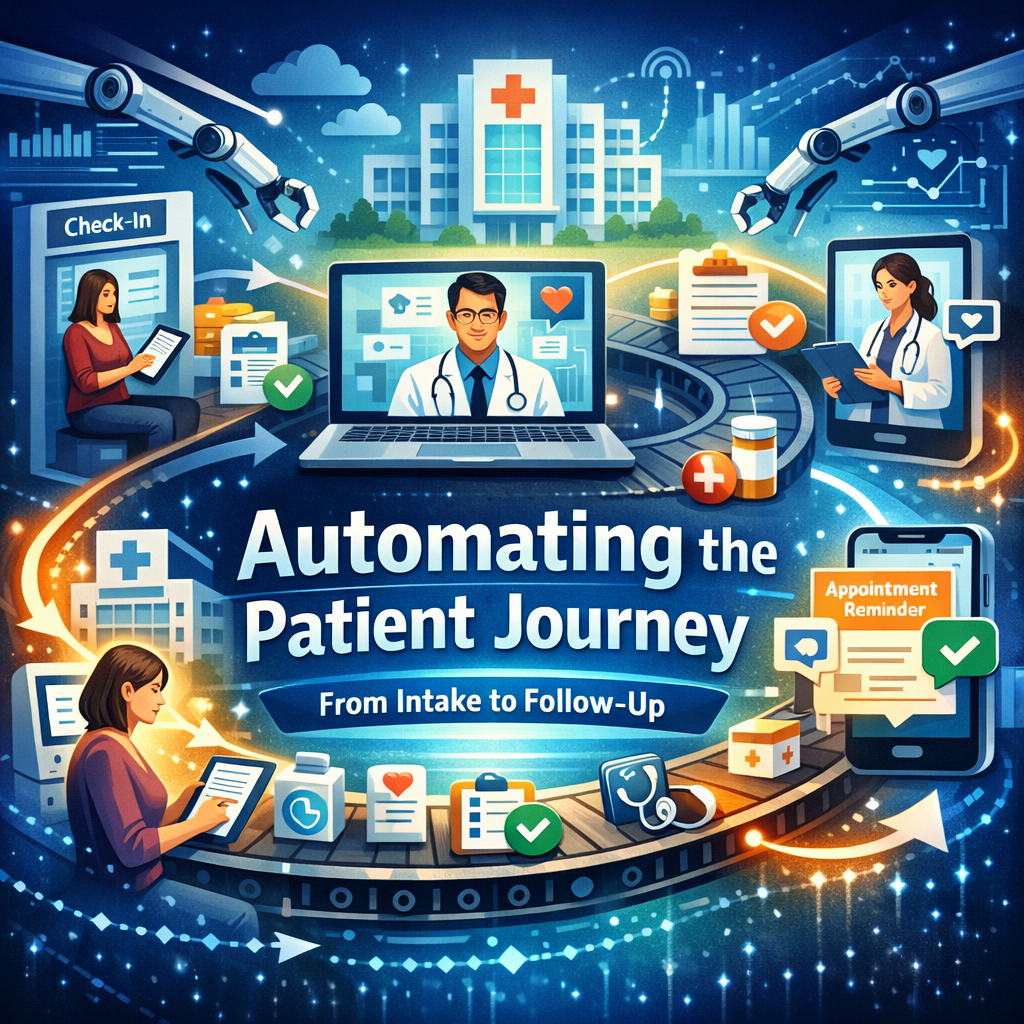
Automating the Patient Journey: From Intake to Follow-Up
title: “From Intake to Follow‑Up: Automating the Entire Patient Journey With Agentic Tools”
author: [Your Name]
date: [Publication Date]
keywords: “patient journey automation, agentic tools”
Introduction
In the dynamic field of healthcare, patient satisfaction and efficient management of patient journeys are pivotal. With the advent of cutting-edge technologies, the implementation of agentic tools has revolutionized how healthcare providers manage patient experiences from intake to follow-up. In this post, we will explore how automating the patient journey enhances healthcare delivery, improves patient outcomes, and optimizes administrative tasks.
Understanding Patient Journey Automation
Patient journey automation involves using technology to streamline and enhance all stages of patient care, from initial contact and appointment scheduling, through treatment and follow-ups. Agentic tools, which include artificial intelligence (AI), machine learning, and other automation tools, play a crucial role in this transformation.
Key Benefits:
- Improved Efficiency: Automation reduces manual tasks, speeding up processes and reducing waiting times.
- Enhanced Patient Experience: Consistent and personalized communication throughout the treatment process increases patient satisfaction.
- Better Data Management: Automated systems provide better tracking, analysis, and secure access to patient data.
Automating Intake Processes
The first step in the patient journey—intake—is crucial as it sets the tone for the patient’s entire experience. Automating this phase with agentic tools can significantly enhance efficiency and accuracy.
How Automation Helps:
- Online Appointment Scheduling: Patients can book appointments at their convenience without human intervention, reducing administrative burdens.
- Automated Patient Intake Forms: Digital forms that are filled out prior to the visit help in preparing medical staff and shortening patient wait times.
Streamlining Diagnosis and Treatment
Agentic tools assist significantly in diagnosing and planning treatment by integrating with diagnostics tools and electronic health records (EHR).
Applications Include:
- AI-driven Diagnostic Tools: AI algorithms can help in accurate and faster diagnosis by analyzing medical data and imaging results.
- Treatment Planning: Automated systems can suggest personalized treatment plans based on patient history and current health data.
Enhancing Communication and Follow-Up
After treatment, maintaining ongoing communication with patients is essential to ensure they are on the right path to recovery and to manage any potential complications.
Automation Strategies:
- Automated Follow-Up Reminders: Systems automatically send reminders for medication or check-up appointments.
- Telehealth Options: Post-treatment follow-ups via telehealth platforms can be streamlined through automated scheduling and reminder systems.
Implementing Agentic Tools in Healthcare Settings
To successfully implement these technologies, healthcare providers must adopt a strategic approach that involves understanding needs, integrating suitable technologies, and training staff.
Steps for Implementation:
- Identify Needs: Determine what aspects of the patient journey need improvement and how automation can address them.
- Choose the Right Tools: Select agentic tools that integrate seamlessly with existing systems and meet the clinic’s operational demands.
- Train Staff: Ensure that all healthcare and administrative staff are well-versed in the new tools.
- Monitor and Adapt: Continuously monitor the technology’s performance and make adjustments as necessary.
Conclusion
The integration of agentic tools in automating the patient journey holds the promise of transforming healthcare delivery. By adopting these innovations, healthcare providers can enhance patient care, increase efficiency, and elevate the overall patient experience. As technology evolves, the scope for further automation and enhanced patient interaction continues to grow, marking a new era in healthcare that is both exciting and transformative.