

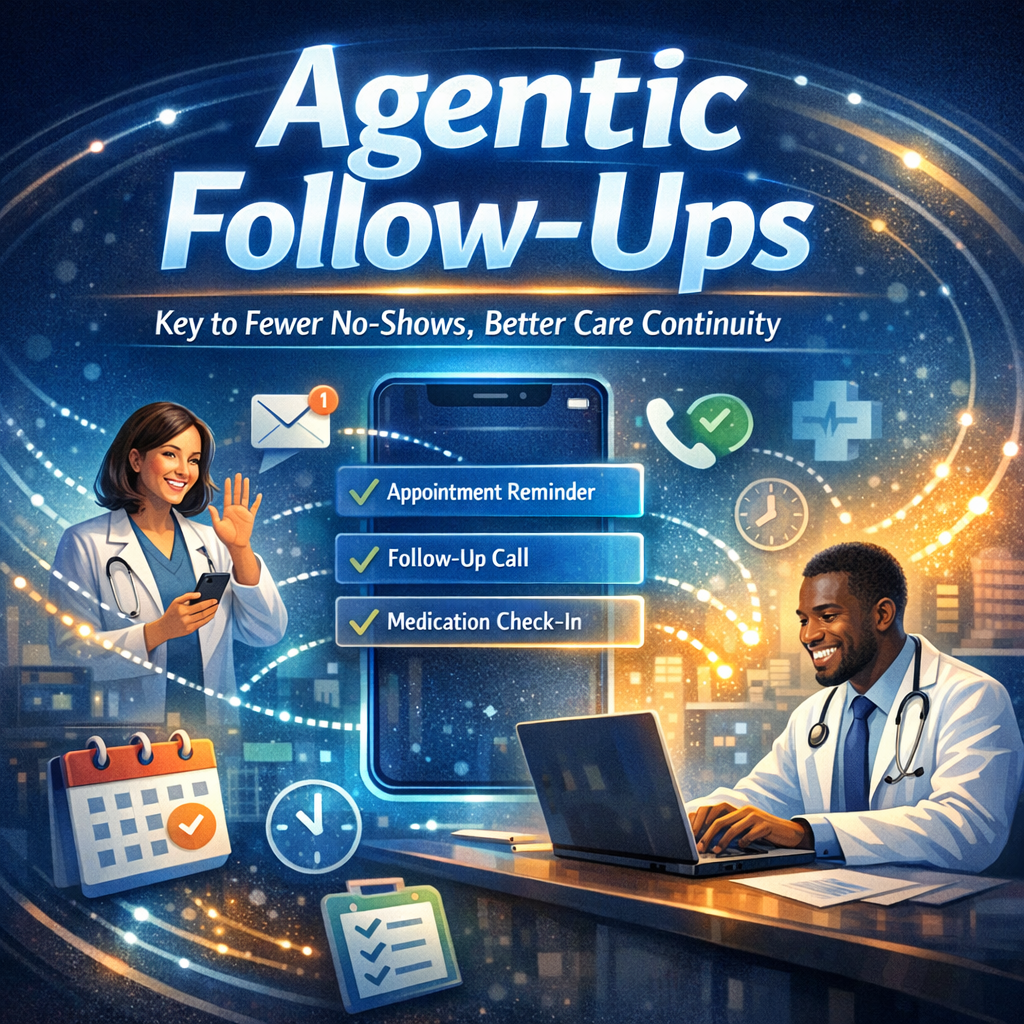
Agentic Follow-Ups: Key to Fewer No-Shows, Better Care Continuity
The Power of Agentic Follow-Ups: Reducing No-Shows and Increasing Continuity of Care
In the healthcare sector, patient engagement and satisfaction are paramount, but maintaining high levels of continuity of care remains a significant challenge. One frequently overlooked strategy that can significantly impact both patient outcomes and practice efficiency is the implementation of agentic follow-ups. This blog explores how such follow-ups can reduce no-show rates and enhance continuity of care, ensuring a smoother healthcare experience for both providers and patients.
Understanding Agentic Follow-Ups
Agentic follow-ups refer to proactive, personalized communication strategies designed to engage patients actively in their own care process. Unlike passive reminders, these follow-ups empower patients by involving them in decision-making and preparing them for upcoming appointments or treatments.

Benefits of Agentic Follow-Ups
- Increased Patient Accountability: When patients feel they are active participants in their care, they are more likely to take responsibility for attending scheduled appointments.
- Enhanced Communication: Regular and meaningful communication helps build trust and alleviates any anxieties patients might have about their health or treatments.
- Improved Health Outcomes: Continuous care without gaps leads to better management of chronic conditions and higher rates of patient satisfaction.
Strategies for Effective Agentic Follow-Ups
Implementing agentic follow-ups requires thoughtful planning and execution. Here are several strategies that healthcare providers can adopt:
1. Personalized Communication
Send personalized messages based on the patient’s health history and preferences. Tailoring the communication makes the patient feel valued and understood.
2. Multiple Communication Channels
Utilize various communication channels such as SMS, email, and phone calls. This approach ensures that the message reaches the patient in the most convenient form, increasing the likelihood of response and attendance.
3. Timely Reminders
Schedule reminders in a way that they are neither too early to be forgotten nor too late to be actionable. Typically, a week before, followed by a day before the appointment works well.
4. Feedback Loop
Create a system for patients to confirm, reschedule, or cancel appointments easily. This not only improves patient convenience but also helps manage the clinic’s schedule more effectively.
5. Post-Appointment Follow-Ups
A follow-up message or call after an appointment can improve patient satisfaction and encourage them to continue with recommended care pathways. It’s also an opportunity to address any immediate post-visit concerns.
Reducing No-Shows with Agentic Communication
No-shows are a costly problem in healthcare, leading to inefficiencies and lost revenue. Agentic follow-ups significantly mitigate this issue by reinforcing the importance of scheduled appointments and creating a seamless communication flow. Here’s how agentic follow-ups can help reduce no-show rates:
- Reminder Automation: Automating the reminder process ensures consistency and reduces the administrative burden on staff.
- Flexible Rescheduling: Offering easy rescheduling options can convert a potential no-show into a future appointment, keeping the patient within the care loop.
- Preemptive Problem Solving: Address potential barriers to attendance, such as transportation or prior scheduling conflicts, during the follow-up process.
Increasing Continuity of Care
Continuity of care is critical for effective healthcare management, particularly for patients with ongoing medical needs. Agentic follow-ups assure the patient that their care pathway is a priority for the provider which encourages ongoing engagement. Effective methods include:
- Regular Check-Ins for Chronic Conditions: Patients with chronic conditions benefit from regular, scheduled communications that help manage their conditions.
- Educational Content: Providing patients with resources and information related to their health conditions can motivate them to maintain continuous care.
Conclusion
In conclusion, agentic follow-ups are more than just reminders. They are a powerful tool in the healthcare provider’s arsenal, designed to boost patient engagement, reduce no-shows, and enhance the overall continuity of care. By investing in sophisticated follow-up strategies, healthcare practices not only improve their operational efficiency but also contribute significantly to better patient outcomes. Adopting these proactive strategies is not merely beneficial; it is a step towards transforming the patient-care dynamic for the better.